
Israel Prepares for the Worst as US–Iran Tensions Raise the Risk of a Wider Middle East War
A Region Holding Its Breath
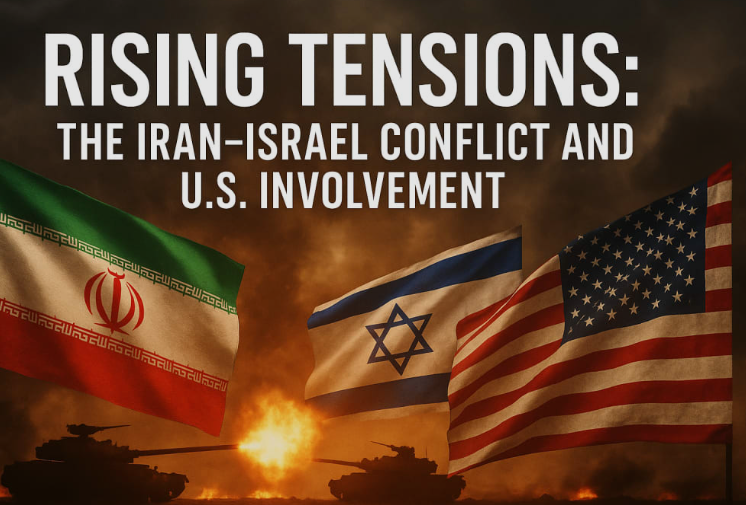
The Middle East is once again standing at the edge of a dangerous precipice. As US–Iran tensions intensify, Israel is quietly preparing for a scenario few leaders want to publicly acknowledge: a catastrophic miscalculation that could ignite a multi-front regional war. Behind closed doors, Israeli defense planners are gaming out worst-case scenarios in which Tehran, fearing imminent threat or seeking deterrence, could launch a pre-emptive strike against Israeli targets.
What makes the current moment especially volatile is not a single dramatic event—but the accumulation of risks. A cyberattack, a targeted assassination, a strike on a proxy force, or even a misread signal could cascade rapidly into open conflict. With the United States reinforcing its military posture in the region—deploying aircraft carriers, destroyers, and strategic assets—the stakes have never been higher.
The coming weeks may prove decisive not just for Israel and Iran, but for the entire Middle East and global security.
Why US–Iran Tensions Are Reaching a Critical Phase
The relationship between Washington and Tehran has been hostile for decades, but recent developments have pushed US–Iran tensions into a more dangerous phase.
Several factors are converging simultaneously:
- Iran’s advancing nuclear capabilities
- Expanded Iranian proxy activity across the region
- Increased US military presence near Iran’s borders
- Political pressure inside both Washington and Tehran
Each side believes it is acting defensively. Yet history shows that conflicts rarely start because leaders intend war—they begin because signals are misinterpreted.
In this climate, even restraint can be mistaken for weakness.
Israel’s Quiet Preparations for a Worst-Case Scenario
Unlike public rhetoric, Israeli military planning tends to be sober and deeply cautious. According to regional security analysts, Israel is preparing not for a planned Iranian strike—but for a miscalculated one.
Israeli defense officials are particularly concerned about:
- A sudden Iranian missile or drone barrage
- Coordinated attacks by Hezbollah and other proxies
- Cyber operations targeting Israeli infrastructure
- Escalation triggered by covert operations
Israel’s fear is not necessarily Iran’s intention to start a war—but Tehran’s belief that war is inevitable.
The Trigger Problem: How One Spark Could Ignite a Regional Fire
The most dangerous conflicts often begin with a single spark. In the Middle East, the list of potential triggers is long and growing.
Possible Escalation Triggers Include:
- An assassination of a senior Iranian or proxy commander
- A cyberattack crippling energy or military systems
- A strike on Iranian nuclear infrastructure
- Civilian casualties from proxy attacks
- Naval incidents in the Gulf
Once triggered, escalation could unfold faster than diplomacy can contain it.
Israeli planners worry that Iran, facing internal pressure and external threats, might decide that striking first is safer than waiting.
Iran’s Perspective: Deterrence or Desperation?
From Tehran’s point of view, the regional environment looks increasingly hostile. Iran sees US military deployments, Israeli covert operations, and tightening sanctions as part of a broader encirclement strategy.
Iranian leadership has repeatedly emphasized:
- The right to defend itself
- The legitimacy of deterrence
- The danger of Western “provocations”
Hardline rhetoric from Supreme Leader Ayatollah Ali Khamenei reflects a belief that compromise has failed. In such a mindset, pre-emptive action can appear rational—even if it is catastrophic.
This psychological dimension is central to understanding the risk of miscalculation.
The US Military Signal: Aircraft Carriers and Deterrence
In response to escalating US–Iran tensions, the United States has significantly reinforced its military posture in the Middle East.
The presence of:
- USS Abraham Lincoln
- USS George H.W. Bush
- Escorting destroyers and strike groups
is no coincidence.
Washington’s message is clear: any Iranian attack on US interests or allies will be met with overwhelming force. Aircraft carriers are not just military assets—they are political signals.
However, deterrence cuts both ways. What Washington sees as prevention, Tehran may see as preparation.
Israel’s Multi-Front War Fear
Israel’s greatest strategic fear is not a single attack—but a synchronized one.
A worst-case scenario could involve:
- Direct Iranian missile launches
- Hezbollah opening a northern front
- Militias striking Israeli targets from Syria and Iraq
- Cyber and information warfare
Such a scenario would stretch Israeli defenses and test US commitments. Israeli officials understand that a prolonged regional war would reshape the Middle East for a generation.
This is why Israel is preparing quietly rather than speaking loudly.
The Role of Rhetoric: Words That Narrow Diplomatic Space
Rhetoric matters in geopolitics—especially during moments of tension.
Statements from:
- Ayatollah Khamenei emphasizing resistance
- Donald Trump signaling unpredictability
- Regional leaders issuing warnings
have hardened positions and narrowed diplomatic exit ramps. Each statement, intended for domestic audiences, increases the risk that leaders feel trapped by their own words.
In this environment, backing down becomes politically costly—even when it is strategically wise.
Proxy Networks: The Hidden Frontlines
Iran’s regional influence is built not just on missiles, but on networks.
Across the Middle East, Iranian-aligned groups operate in:
- Lebanon
- Syria
- Iraq
- Yemen
These proxies provide Tehran with plausible deniability—but also increase unpredictability. A local commander acting independently could trigger a chain reaction beyond anyone’s control.
For Israel, this is a nightmare scenario: war without a single clear enemy or battlefield.
Why the Middle East Is Especially Vulnerable Right Now
The broader Middle East is already strained by:
- Economic instability
- Political fragmentation
- Ongoing conflicts
- Energy market pressures
A major conflict involving Israel, Iran, and the United States would ripple through global oil markets, shipping lanes, and financial systems.
The region lacks robust crisis-management mechanisms. Once escalation begins, stopping it becomes extraordinarily difficult.
Global Implications: Not Just a Regional Crisis
A war triggered by rising US–Iran tensions would not remain local.
Potential global consequences include:
- Energy price shocks
- Disrupted trade routes
- Increased terrorism risks
- Great-power involvement
- Long-term instability
For global powers already stretched by conflicts elsewhere, a Middle East war would be a destabilizing force with worldwide consequences.
The Narrow Window for De-Escalation
Despite the tension, diplomacy has not completely disappeared. Quiet channels still exist, and regional actors are aware of the catastrophic costs of war.
However, time is limited.
Every deployment, speech, and covert action narrows the margin for error. The danger is not deliberate war—but a crisis that spins beyond control.
Conclusion: A Region at the Mercy of Miscalculation
The current moment is one of profound danger. As US–Iran tensions rise, Israel’s quiet preparations reveal how seriously leaders are taking the possibility of miscalculation. With American warships signaling deterrence and Iranian rhetoric growing sharper, the Middle East stands at a crossroads.
History shows that wars often begin not with declarations—but with misunderstandings. Whether restraint prevails or escalation erupts may depend on decisions made in silence, far from cameras and headlines.
The coming weeks are critical—not just for Israel or Iran, but for the fragile stability of the Middle East and the security of the world.