
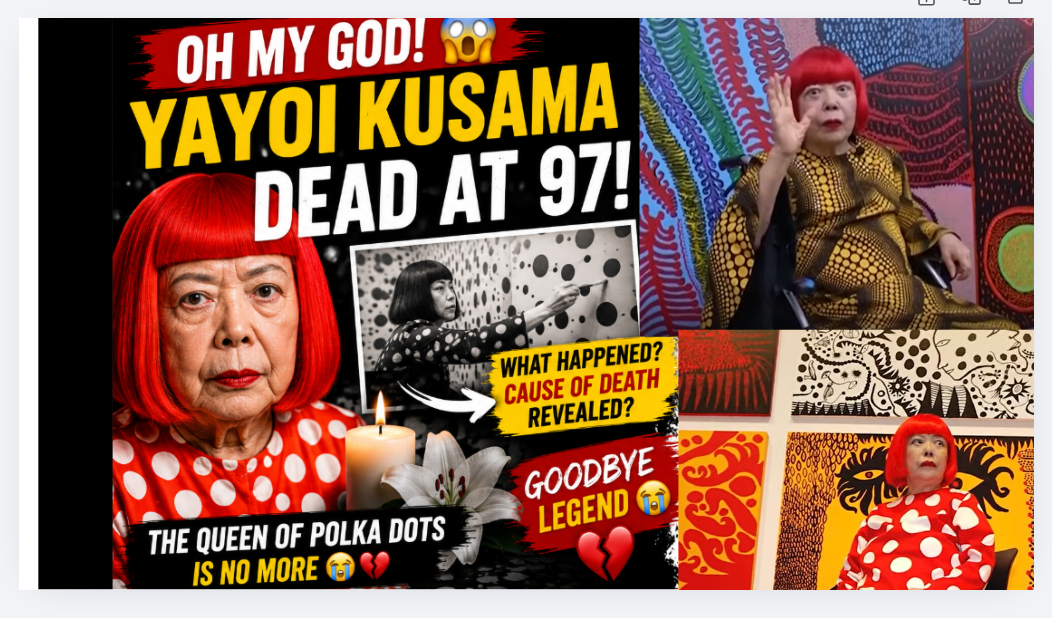
Yayoi Kusama has died at 97. The Japanese avant-garde artist behind the iconic Infinity Mirror Rooms and polka-dot works leaves an extraordinary global legacy.
Yayoi Kusama Dies at 97: The World Loses One of Its Most Recognizable Artists
For decades, Yayoi Kusama turned dots, mirrors, pumpkins and seemingly endless patterns into a visual language recognized around the world.
Now, that extraordinary chapter has come to an end.
The celebrated Japanese avant-garde artist Yayoi Kusama died at the age of 97 in Tokyo, her museum and foundation announced on Thursday. According to the official announcement, Kusama passed away at a Tokyo hospital on August 14, 2026, although news of her death was announced publicly on August 27. (YAYOI KUSAMA MUSEUM 草間彌生美術館)
Her death marks the loss of one of the most influential and commercially successful contemporary artists of the modern era.
Yet the story of Kusama was never simply about fame.
It was about persistence.
It was about transforming deeply personal experiences into art—and ultimately creating a visual world that millions of people could enter.
Yayoi Kusama Death Confirmed by Her Museum
The confirmation of Yayoi Kusama’s death came directly from the institution associated with her work.
The Yayoi Kusama Museum said she died at a hospital in Tokyo at the age of 97. The statement described her life as one devoted almost entirely to artistic creation and said she continued painting until her final days. (YAYOI KUSAMA MUSEUM 草間彌生美術館)
Reuters also reported that Kusama died on August 14 and described her as a pioneering artist who transformed lifelong hallucinations and personal struggles into internationally recognized paintings, sculptures and installations. (Reuters)
The announcement immediately prompted tributes from across the international art world.
For many people, however, the news was difficult to separate from the extraordinary visual identity Kusama created during her eight-decade career.
Her bright colors.
Her repeating dots.
Her mirrored rooms.
Her pumpkins.
Her infinity motifs.
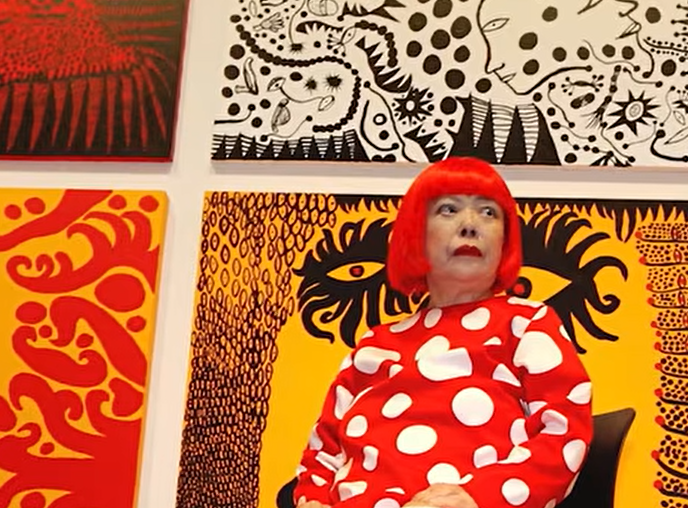
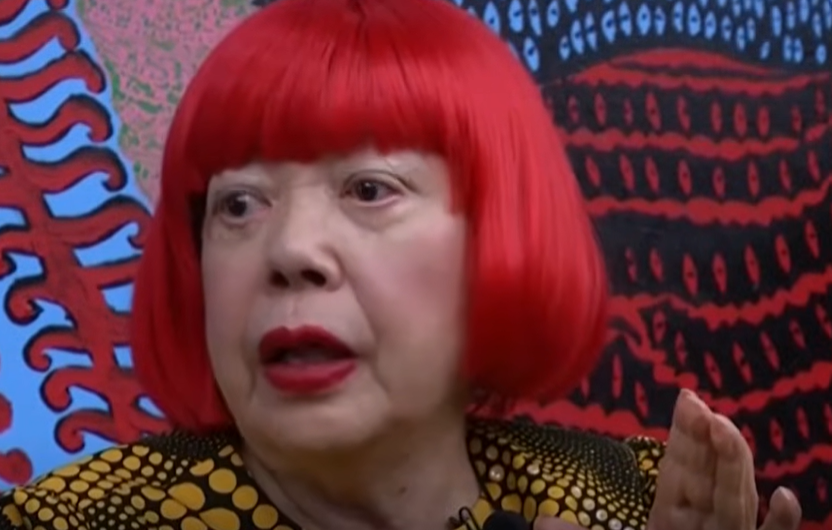
Together, they became unmistakably Kusama.
What Was Kusama’s Cause of Death?
One of the first questions people are asking following the news is: What was Yayoi Kusama’s cause of death?
At the time of publication, the official announcement confirms that Kusama died at a hospital in Tokyo but does not state a specific cause of death. (YAYOI KUSAMA MUSEUM 草間彌生美術館)
Therefore, reports or social-media posts claiming a particular medical cause should be treated cautiously unless supported by an official statement or a reliable news organization.
What is known is that Kusama was 97 and remained artistically active extraordinarily late into her life.
Reuters reported that she continued painting until her death, while the museum said she never abandoned her brush and remained committed to her artistic philosophy. (Reuters)
Who Was Yayoi Kusama?
Yayoi Kusama was born on March 22, 1929, in Matsumoto, Nagano, Japan.
From childhood, she was drawn toward drawing and painting.
Her early artistic experiences were strongly influenced by unusual visual phenomena she experienced, including hallucinations involving patterns and dots. Rather than simply trying to escape those experiences, Kusama eventually transformed them into the foundation of her artistic language. (The National)
That decision would ultimately change contemporary art.
Her work explored repetition, infinity, self-obliteration, sexuality, identity and the relationship between the individual and the universe.
At first, however, international recognition did not come easily.
Kusama had to fight for attention in an art world where women—and particularly Asian women working outside conventional artistic traditions—often struggled to receive equal recognition.
Yayoi Kusama Moved to New York and Challenged the Art World
In 1957, Kusama left Japan for the United States.
She eventually settled in New York, where she became involved in the city’s experimental art scene during the late 1950s and 1960s.
There, she developed her famous Infinity Net paintings.
These works featured repetitive marks covering enormous canvases, creating the impression that the patterns continued beyond the edges of the artwork.
The concept would become central to her later career.
Kusama also created soft sculptures, installations and performance works that challenged conventional ideas about art.
However, recognition did not always follow.
Kusama later argued that some of her ideas were appropriated by better-known male artists working in the same New York environment. Her relationship with the established art world remained complicated throughout her career. (The Guardian)
The 1966 Venice Biennale and the $2 Mirror Balls
One of the most memorable moments in Kusama Yayoi’s early career came at the 1966 Venice Biennale.
She presented Narcissus Garden, an installation consisting of hundreds of mirrored spheres.
Kusama famously offered the mirrored balls for sale for $2 each, turning the artwork into both an artistic statement and a commentary on the commercialization of art.
The installation eventually became one of the best-known works associated with her career.
At the time, however, Kusama was far from the global superstar she would eventually become.
That transformation took decades.
From Outsider to Global Art Superstar
The extraordinary irony of Kusama’s career is that some of her greatest recognition arrived later in life.
After returning to Japan in the 1970s, she continued working despite significant personal challenges.
She voluntarily entered a psychiatric hospital in Tokyo in 1977 and continued creating art from a studio near the hospital. (The Guardian)
Rather than ending her career, the arrangement gave Kusama a stable environment from which to continue producing work.
Eventually, international museums began rediscovering her importance.
Major institutions mounted exhibitions of her work, including the Museum of Modern Art in New York, Tate Modern in London and the Hirshhorn Museum in Washington, D.C. (The Guardian)
By the 21st century, Kusama had become a global cultural phenomenon.
The Infinity Mirror Rooms Made Kusama a Worldwide Sensation
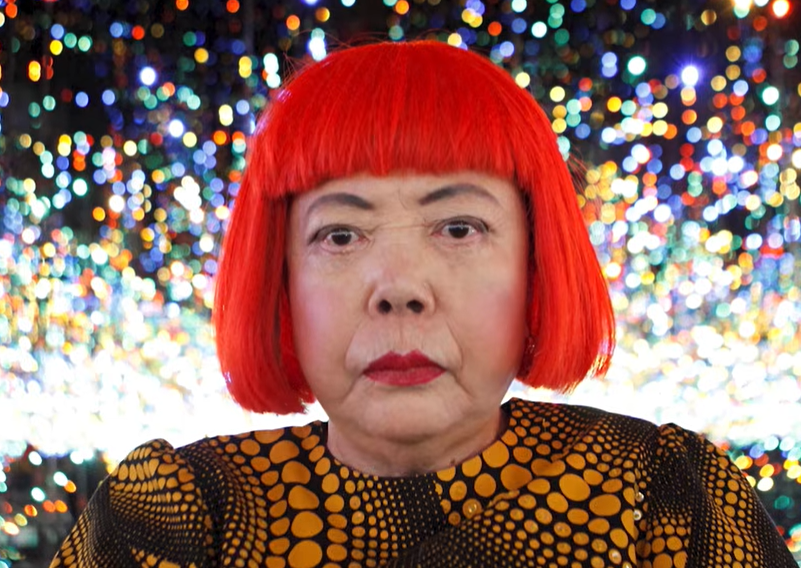
If one body of work helped introduce Yayoi Kusama art to millions of new viewers, it was her Infinity Mirror Rooms.
These installations use mirrors, lights and repeated forms to create the illusion of endless space.
Visitors appear surrounded by infinite reflections.
The experience is immersive rather than simply observational.
That distinction became particularly important during the social-media era.
Photographs and videos from Kusama’s installations spread rapidly online, introducing her work to audiences who might never have visited a traditional contemporary-art exhibition.
Queues for some of her exhibitions stretched for hours.
The installations became destinations in their own right.
Kusama had effectively transformed the gallery visit into an experience.
Why Are Polka Dots So Important to Yayoi Kusama?
The polka dot is arguably Kusama’s most recognizable artistic symbol.
But the dots are much more than a decorative style.
Kusama connected her repetitive patterns with the visual experiences she encountered from childhood.
She described seeing patterns spread across objects and spaces, creating a sensation in which boundaries between herself and the surrounding world seemed to disappear. (The Guardian)
That idea became central to her philosophy of self-obliteration.
The individual becomes part of something much larger.
One dot becomes thousands.
One person becomes part of an infinite universe.
That concept appears repeatedly across her paintings, sculptures and installations.
Yayoi Kusama’s Pumpkins Became Cultural Icons
Alongside her dots and mirrors, pumpkins became another defining element of Kusama’s career.
Her brightly colored pumpkins covered in black dots have become some of the most recognizable contemporary-art sculptures in the world.
Kusama’s fascination with pumpkins began during childhood.
She later transformed that personal memory into an extensive artistic series.
Her pumpkin works became particularly popular with museum visitors and social-media audiences.
The combination of bright colors, familiar shapes and repetitive dots made them instantly recognizable.
Yayoi Kusama’s Art Became Extremely Valuable
Kusama’s artistic influence was eventually matched by enormous commercial success.
Her works have sold for millions of dollars at auction.
One of her paintings, White No. 28, sold for about $7.1 million in 2014, a record at the time for a work by a living female artist, according to reports. (The Guardian)
Another Kusama painting later sold for approximately $10.5 million, further demonstrating the extraordinary demand for her work. (The National)
Her success also extended beyond traditional galleries.
Kusama collaborated with major fashion and commercial brands, helping bring contemporary art into mainstream popular culture.
Yayoi Kusama Museum in Tokyo
Kusama’s legacy also has a permanent home in Tokyo.
The Yayoi Kusama Museum opened in 2017 and has become an important destination for people wanting to experience her work.
The museum continues to present exhibitions dedicated to her art.
Interestingly, the museum had an exhibition titled “KUSAMA’s POP” scheduled through August 30, 2026. Following the announcement of Kusama’s death, the museum said the exhibition would continue as scheduled. (YAYOI KUSAMA MUSEUM 草間彌生美術館)
That decision carries an unmistakable symbolism.
Even after Kusama’s death, the work continues.
Kusama Continued Creating Until the End
Perhaps one of the most remarkable details surrounding the Yayoi Kusama death announcement is that her creative work continued almost until the very end.
The official museum statement said Kusama continued to paint until her final days. (YAYOI KUSAMA MUSEUM 草間彌生美術館)
That detail reflects something fundamental about her career.
For Kusama, art was not simply a profession.
It was a daily necessity.
She repeatedly described artistic creation as central to her survival and identity.
Even as her international reputation grew, she continued returning to the studio.
Major Honors for Yayoi Kusama
Recognition eventually arrived on a scale that would have seemed almost unimaginable during the early years of her career.
Kusama received numerous international honors, including:
- Japan’s Order of Culture
- Praemium Imperiale
- Ordre des Arts et des Lettres
- Major retrospectives at leading international museums
- A permanent museum dedicated to her work in Tokyo
She became one of Japan’s most internationally recognized contemporary artists.
Her influence extended across painting, sculpture, installation, performance, literature and fashion.
Yayoi Kusama’s Legacy Goes Far Beyond the Polka Dots
It is tempting to describe Kusama simply as the “polka dot artist.”
But that description leaves out much of what made her important.
She challenged the boundaries between art and everyday experience.
She worked across different mediums.
She addressed themes that included sexuality, identity, mental health, war, consumerism and infinity.
Most importantly, she turned personal experiences that could have remained private into visual ideas that resonated with audiences around the world.
That transformation is at the heart of her legacy.
What Happens to Yayoi Kusama’s Art After Her Death?
The death of an artist of Kusama’s stature inevitably raises questions about what happens next.
Her studio, museum and foundation have already indicated that her artistic wishes will continue to guide the presentation of her work.
The official museum said it would carry forward Kusama’s wishes and continue using art to bring hope and strength to people around the world. (YAYOI KUSAMA MUSEUM 草間彌生美術館)
Her exhibitions already scheduled around the world are also likely to remain important parts of her legacy.
The official Kusama website lists a major exhibition at Amsterdam’s Stedelijk Museum scheduled from September 11, 2026, through January 17, 2027. (草間彌生 Yayoi Kusama Official Site)
That means audiences will continue encountering new generations of Kusama’s work even after her death.
Yayoi Kusama Death: Key Facts
| Detail | Information |
|---|---|
| Name | Yayoi Kusama |
| Born | March 22, 1929 |
| Birthplace | Matsumoto, Nagano, Japan |
| Age at death | 97 |
| Died | August 14, 2026 |
| Place of death | Tokyo hospital |
| Known for | Polka dots, Infinity Mirror Rooms, pumpkins, avant-garde art |
| Nationality | Japanese |
| Major mediums | Painting, sculpture, installation, performance, writing |
| Museum | Yayoi Kusama Museum, Tokyo |
The official museum confirms the date, location and age at death. (YAYOI KUSAMA MUSEUM 草間彌生美術館)
Google FAQ About Yayoi Kusama
Did Yayoi Kusama die?
Yes. Yayoi Kusama died at the age of 97 at a hospital in Tokyo on August 14, 2026. Her death was publicly announced by her museum and foundation on August 27. (YAYOI KUSAMA MUSEUM 草間彌生美術館)
What was Yayoi Kusama’s cause of death?
A specific cause of death has not been publicly announced by her museum or foundation. Reports confirm that she died at a Tokyo hospital at age 97. (YAYOI KUSAMA MUSEUM 草間彌生美術館)
How old was Yayoi Kusama when she died?
Yayoi Kusama was 97 years old when she died.
What was Yayoi Kusama famous for?
Kusama was famous for her polka-dot artwork, Infinity Mirror Rooms, pumpkin sculptures, Infinity Net paintings and avant-garde installations.
Where did Yayoi Kusama die?
She died at a hospital in Tokyo, Japan, according to the official announcement from the Yayoi Kusama Museum. (YAYOI KUSAMA MUSEUM 草間彌生美術館)
Where was Yayoi Kusama born?
Kusama was born in Matsumoto, Nagano, Japan, in 1929. (Reuters)
What are Yayoi Kusama’s most famous works?
Among her best-known works are her Infinity Mirror Rooms, Infinity Net paintings, pumpkin sculptures and Narcissus Garden.
Did Yayoi Kusama live in a psychiatric hospital?
Yes. Kusama voluntarily entered a psychiatric hospital in Tokyo in 1977 and continued creating art from a nearby studio. (The Guardian)
Did Yayoi Kusama continue making art before her death?
Yes. Her museum said she continued painting until her final days. (YAYOI KUSAMA MUSEUM 草間彌生美術館)
Final Thoughts: A Life Spent Turning Infinity Into Art
The death of Yayoi Kusama closes the life story of an artist who refused to fit comfortably into any category.
She was a painter.
A sculptor.
A performance artist.
A writer.
An installation artist.
And eventually, a global cultural icon.
But perhaps the most remarkable part of the Kusama artist story is how long it took the world to fully recognize what she had created.
The young woman who left Japan for New York eventually became one of the most recognizable artists on Earth.
Her dots became symbols.
Her pumpkins became landmarks.
Her mirrors became destinations.
And her ideas about infinity became part of popular culture.
Yayoi Kusama died at 97, but the world she created does not disappear with her.
The mirrors remain. The dots remain. The pumpkins remain. And somewhere inside those endless reflections is the enduring legacy of an artist who spent her life trying to understand infinity.