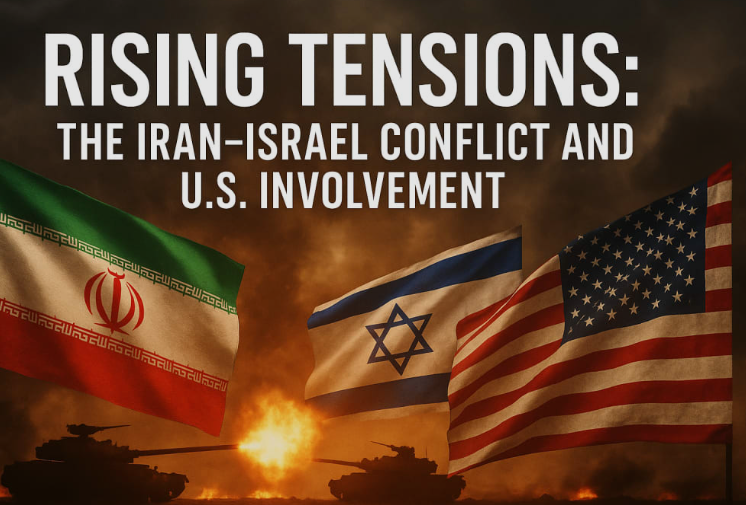
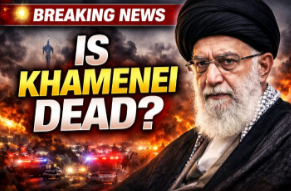

As the US-Iran war dominates global headlines, one question has shaken diplomatic corridors, intelligence circles, and social media feeds alike: Is Khamenei dead?
The name at the center of the storm is Ayatollah Ali Khamenei, the long-serving Supreme Leader of Iran and the most powerful political and religious authority in the Islamic Republic. Reports, counter-reports, denials, and confirmations have collided in a fog of war that has left the world scrambling for clarity.
But beyond the rumors lies a deeper story — one about power, symbolism, military escalation, and the fragile balance of the Middle East.
The Strike That Sparked Global Shock
The dramatic speculation began after a series of precision U.S. military strikes targeted key Iranian military installations amid rapidly escalating hostilities in the US-Iran war. American officials described the operation as a defensive move aimed at neutralizing strategic threats.
However, within hours, unverified reports began circulating that one of the targets included a high-level leadership compound in Tehran.
Soon, the question exploded worldwide:
The White House initially declined to comment directly on the reports. President Donald Trump, speaking from Washington, stated that the United States had carried out “high-precision operations” but stopped short of confirming any leadership casualties.
Meanwhile, Iranian state media went silent — a silence that only intensified global speculation.
Confusion, Denials, and Breaking Claims
In modern warfare, information moves as fast as missiles. Within hours of the strike, multiple international outlets cited anonymous intelligence sources suggesting that Ayatollah Khamenei may have been fatally wounded.
Social media platforms erupted. Hashtags related to “ayatullah khamenei” and “is khamenei dead” began trending globally.
Iranian officials initially denied the reports, calling them “psychological warfare.” A senior government spokesperson insisted that the Supreme Leader was “alive and overseeing national defense operations.”
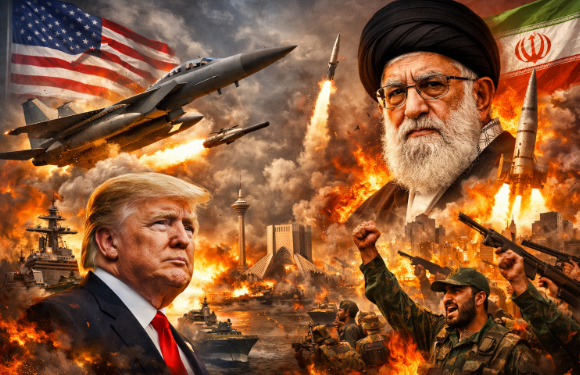
But analysts noted something unusual: no public appearance, no video address, and no immediate photographic proof.
In the political culture of Iran, where symbolism matters deeply, prolonged silence from the Supreme Leader during wartime is rare.
That silence fueled the fire.
Why Ayatollah Khamenei’s Fate Matters So Much
To understand the magnitude of this moment, one must understand who Ayatollah Khamenei is — and what he represents.
Since 1989, Khamenei has been the ultimate authority in Iran’s political system. As Supreme Leader, he commands the armed forces, controls the judiciary, influences elections, and shapes foreign policy. Presidents come and go. Governments shift. But the Supreme Leader remains the anchor of power.
In the US-Iran war context, his role is even more critical. He has been the ideological architect of Iran’s resistance strategy against American influence in the Middle East.
If Ayatollah Khamenei were truly dead, the consequences would extend far beyond Tehran:
- A potential power vacuum
- Internal struggles among elite factions
- Increased military unpredictability
- Regional destabilization
The question “is Khamenei dead” is not just about one man — it’s about the future direction of an entire nation.
The Strategic Implications in the US-Iran War
If confirmed, Khamenei’s death would represent one of the most dramatic leadership losses in modern Middle Eastern history.
Military experts note that eliminating a sitting Supreme Leader during an active conflict would mark an extraordinary escalation in the US-Iran war.
There are three possible strategic scenarios:
1️⃣ Immediate Retaliation
Iran could respond with large-scale missile strikes on U.S. bases across the region.
2️⃣ Proxy Escalation
Tehran could activate allied militias in Iraq, Syria, Lebanon, or Yemen to expand the battlefield indirectly.
3️⃣ Internal Consolidation
Iran’s leadership could temporarily suppress retaliation while securing succession and consolidating power.
Each path carries enormous risks.
The Succession Question: Who Would Replace Him?
If Ayatollah Khamenei were confirmed dead, Iran’s constitutional mechanism would activate.
A temporary leadership council would take over until the Assembly of Experts selects a new Supreme Leader.
However, succession in Iran is not purely procedural — it is political, ideological, and deeply strategic.
Possible successors would likely come from senior clerical or security circles, but factional rivalry could intensify.
Some analysts argue that the Revolutionary Guard Corps might gain unprecedented influence in such a transition, potentially hardening Iran’s military posture in the US-Iran war.
Others speculate that a new leader could adopt a more pragmatic approach, seeking de-escalation to avoid further devastation.
The uncertainty itself increases volatility.
Global Reactions: Anxiety and Diplomacy
As rumors about Ayatollah Khamenei spread, world capitals reacted cautiously.
European leaders called for immediate restraint. Oil markets fluctuated sharply. Defense ministries across the Middle East elevated threat levels.
The United Nations convened emergency consultations amid growing fears that the US-Iran war could expand into a multi-front regional conflict.
Meanwhile, regional players watched closely.
For countries that see Iran as a rival, Khamenei’s potential death could shift the balance of influence.
For others, it could trigger instability spilling across borders.
The Information War
Modern warfare is not fought only with missiles and drones — it is fought with narratives.
Speculation about “is Khamenei dead” illustrates how information itself becomes a strategic weapon.
If confirmed too early, Iran risks appearing vulnerable.
If denied falsely, credibility suffers.
If delayed, uncertainty feeds chaos.
Both Washington and Tehran understand the psychological dimensions of this conflict.
In many ways, the battle over information may shape global perception as much as any battlefield development.
The Human Dimension
Lost amid strategic calculations is the human reality.
In Iran, citizens face uncertainty, economic strain, and the fear of escalating airstrikes.
In the United States, families of service members monitor news anxiously.
Across the Middle East, civilians worry that they could become collateral damage in a widening US-Iran war.
Leadership headlines often dominate coverage, but the true cost of conflict is always borne by ordinary people.
So… Is Khamenei Dead?
At the time of this writing, official confirmation remains complex and politically charged. Conflicting statements, intelligence leaks, and strategic silence continue to cloud the picture.
What is undeniable is that the question itself — “is khamenei dead?” — has become symbolic of the larger uncertainty engulfing the US-Iran war.
Whether alive or deceased, Ayatollah Khamenei’s fate has already altered the trajectory of this conflict.
A Defining Moment for the Middle East
The US-Iran war now stands at a crossroads.
If Ayatollah Khamenei is confirmed dead, history will mark this as a defining moment — a turning point that reshaped regional power structures.
If he survives, the attempted strike still represents one of the boldest escalations in decades of hostility.
Either way, the Middle East faces a period of profound transformation.
The world watches. Markets tremble. Diplomats negotiate behind closed doors. Military commanders remain on alert.
And one question continues to echo across continents:
Is Khamenei dead — and what does it mean for the future of the US-Iran war?

 By
By