Focus Keywords: trump greenland warning, greenland dispute
Secondary Keywords: Donald Trump Greenland, Greenland latest news, Denmark Greenland, Greenland sovereignty, NATO allies, US Greenland relations, Arctic security, Trump foreign policy, Greenland strategic importance, Arctic military, Greenland news today, Trump latest news
Trump Greenland Warning Sparks Global Tensions as U.S. Pushes for Control of Strategic Arctic Island
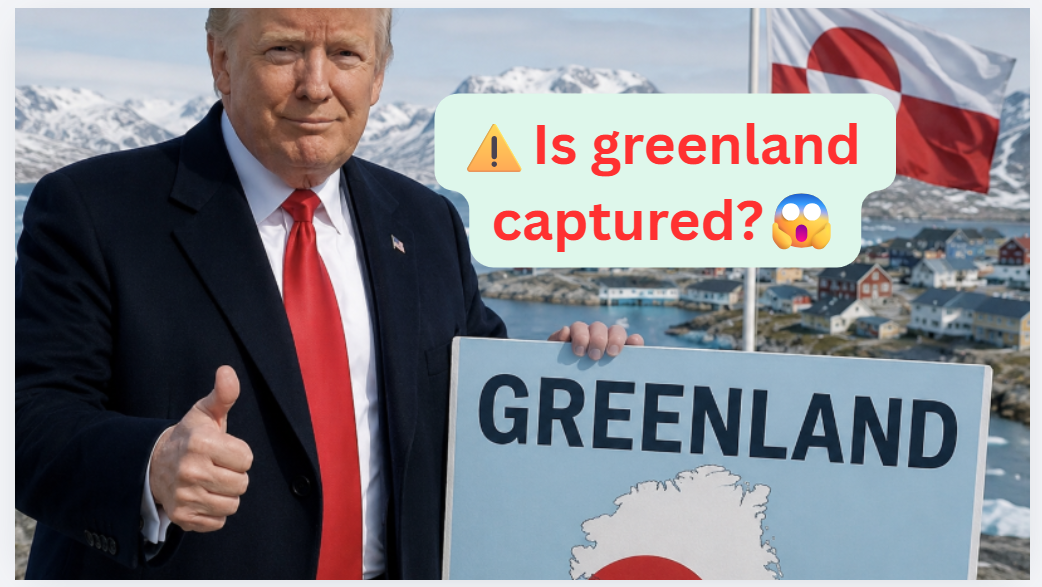
The geopolitical battle over the Arctic has taken a dramatic new turn after President Donald Trump reignited one of his most controversial foreign policy ambitions—acquiring Greenland. In a statement that has sent shockwaves across Europe and the international community, Trump warned that the United States could reconsider its military commitment to NATO and even impose tariffs on European allies if they continue opposing Washington’s plans regarding Greenland.
The renewed Trump Greenland warning has transformed what was once viewed as an unusual diplomatic proposal into a major international dispute. Denmark, which governs Greenland’s foreign affairs and defense, immediately rejected Trump’s remarks, insisting once again that “Greenland is not for sale.”
The latest comments have reignited the long-running Greenland dispute, triggering fresh debates over Arctic security, NATO unity, and the growing competition between global superpowers for control of one of the world’s most strategically important regions.
As tensions rise, analysts believe the dispute could significantly influence U.S.-Europe relations, Arctic defense strategy, and international diplomacy for years to come.
Trump Revives Greenland Acquisition Plan
Speaking during a meeting with reporters, President Donald Trump declared that Greenland remains a vital strategic interest for the United States.
According to Trump, America’s national security requires greater influence in the Arctic as Russia and China continue expanding their military and economic presence in the region.
Trump emphasized that Greenland is “very important” to U.S. security and suggested Washington should not rule out stronger measures if European allies continue rejecting American proposals.
The president reportedly warned that countries opposing U.S. interests could face economic consequences, including potential tariffs, while also suggesting America’s future military commitments to NATO could be reassessed.
Those remarks immediately became headline news worldwide, placing the Trump Greenland warning among the most discussed geopolitical stories of the week.
Denmark Rejects Trump’s Remarks
The response from Denmark was swift and unequivocal.
Danish officials reaffirmed that Greenland is an autonomous territory within the Kingdom of Denmark and that its future belongs solely to the people of Greenland.
Government representatives dismissed any suggestion that Greenland could be purchased or transferred to another country.
Officials repeated a statement that has become symbolic throughout the ongoing Greenland dispute:
“Greenland is not for sale.”
Leaders in Copenhagen stressed that sovereignty cannot be negotiated through political pressure, military leverage, or trade negotiations.
The Danish government also reaffirmed its commitment to working alongside NATO while protecting Greenland’s autonomy and democratic institutions.
Why Greenland Has Become One of the World’s Most Valuable Territories
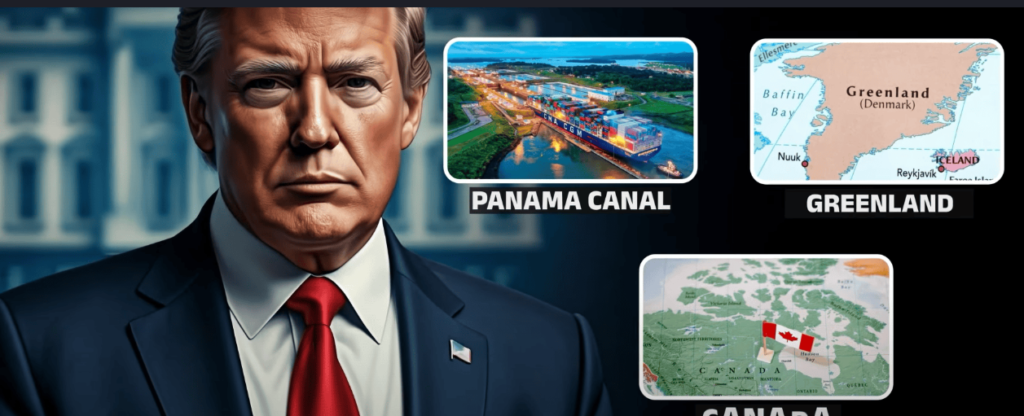
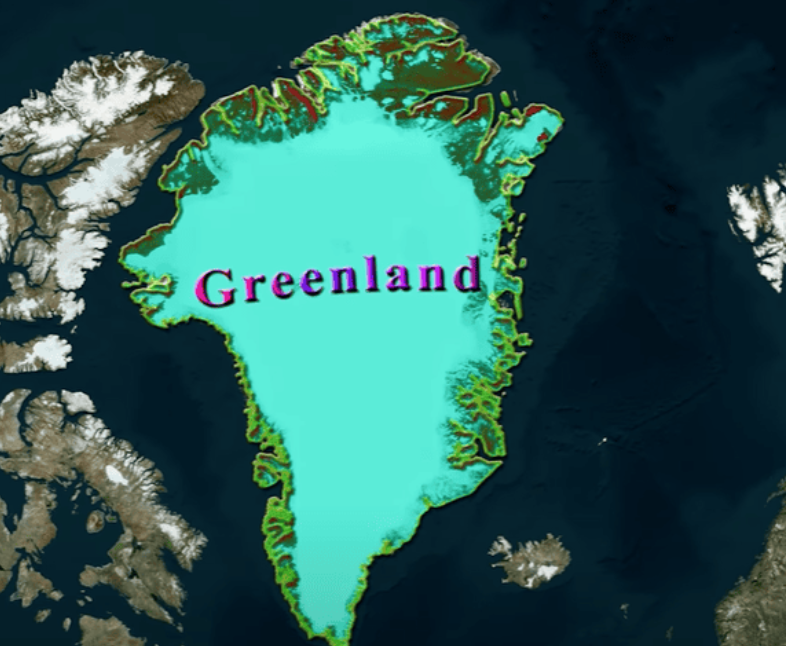
Although Greenland has a population of only around 56,000 people, the island has become one of the most strategically valuable locations on Earth.
Located between North America and Europe, Greenland serves as a gateway to the Arctic Ocean.
Its geographical position makes it essential for:
- Arctic military operations
- Missile defense systems
- Early-warning radar installations
- North Atlantic shipping routes
- Future commercial trade corridors
- Monitoring Russian military activity
The United States already operates the Pituffik Space Base (formerly Thule Air Base) in northwestern Greenland, one of America’s most important military installations outside the continental United States.
Military experts argue that controlling Arctic routes will become increasingly important as melting sea ice opens new shipping lanes.
This explains why Greenland has attracted growing attention from Washington, Moscow, Beijing, and NATO allies alike.
Natural Resources Fuel the Greenland Dispute
Security is only one part of the story.
Greenland possesses enormous untapped reserves of valuable natural resources.
Experts estimate the island contains significant deposits of:
- Rare earth minerals
- Uranium
- Gold
- Zinc
- Iron ore
- Nickel
- Copper
- Oil and natural gas (potential offshore reserves)
Rare earth minerals have become particularly important because they are essential for manufacturing electric vehicles, smartphones, wind turbines, fighter aircraft, satellites, and advanced military equipment.
China currently dominates much of the global rare earth supply chain.
For American policymakers, increasing access to Greenland’s mineral wealth could reduce U.S. dependence on foreign suppliers while strengthening domestic manufacturing and national security.
This resource competition has become a central issue behind the expanding Greenland dispute.
NATO Faces an Unexpected Challenge
Trump’s comments have also raised serious questions about NATO unity.
The alliance has long depended on close cooperation between the United States, Canada, and European members.
However, suggesting that military commitments could become linked to disagreements over Greenland has unsettled many European leaders.
Political analysts believe any reduction in American military support would significantly reshape NATO’s strategic planning.
Several European officials have privately expressed concern that disagreements over Greenland should not undermine decades of defense cooperation.
The issue arrives at a time when NATO already faces increasing security challenges from Russia, cyber warfare, and growing instability across Europe.
Greenland’s Leaders Reject Outside Pressure
Greenland’s own political leaders have repeatedly emphasized that decisions about the island’s future belong to its people.
While many Greenlanders support greater economic development and expanded international investment, there remains strong opposition to any suggestion that another nation could simply acquire the territory.
Greenland has steadily gained greater autonomy over recent decades and continues pursuing policies that increase local decision-making.
Many political observers believe Trump’s renewed interest could actually strengthen Greenland’s independence movement by encouraging greater focus on self-governance rather than dependence on either Denmark or foreign powers.
A Dispute That Dates Back Decades
Although Trump’s remarks dominate today’s headlines, American interest in Greenland is far from new.
Following World War II, the United States reportedly offered to purchase Greenland from Denmark.
The proposal was rejected.
During the Cold War, Greenland became increasingly important because of its location between North America and the Soviet Union.
American military facilities expanded significantly throughout the Arctic as both superpowers competed for strategic advantage.
Trump first revived the idea of purchasing Greenland during his previous presidency, surprising world leaders and triggering widespread diplomatic debate.
Many dismissed the proposal at the time.
Now, years later, the issue has returned with even greater geopolitical significance.
Arctic Competition Is Intensifying
The renewed Trump Greenland warning comes amid an increasingly competitive Arctic landscape.
Russia has expanded its Arctic military bases.
China has invested heavily in Arctic research, shipping routes, and infrastructure projects despite not being an Arctic nation.
Meanwhile, climate change is making the region more accessible than ever before.
New shipping corridors, fishing opportunities, and energy exploration projects are transforming the Arctic into one of the world’s most strategically contested regions.
For the United States, Greenland sits at the center of that competition.
Trump Greenland Warning: What Happens Next as Greenland Dispute Reshapes Global Politics?
The renewed Trump Greenland warning has evolved far beyond a political statement. It has become a defining issue in global diplomacy, Arctic security, and the future of transatlantic relations. While Denmark insists Greenland is not for sale, President Donald Trump’s remarks have reopened a debate about strategic territory, military alliances, and the growing competition for influence in the Arctic.
With the United States, Europe, Russia, and China all watching developments closely, the Greenland dispute has become one of the most closely followed geopolitical stories of the year.
Europe Stands Firm Against Trump’s Position
European leaders quickly rallied behind Denmark after Trump’s latest comments.
Several governments reaffirmed that Greenland’s future belongs solely to the Greenlandic people and that sovereignty cannot be determined through political pressure or economic leverage. European officials also emphasized that NATO remains a defensive alliance built on mutual cooperation rather than transactional negotiations.
Privately, many diplomats expressed concern that linking NATO commitments to the Greenland dispute could weaken unity at a time when Europe is already facing major security challenges.
Political analysts say Trump’s remarks have forced European governments to prepare for the possibility of a more assertive U.S. foreign policy in the Arctic. While many allies continue to value close cooperation with Washington, they are also making it clear that territorial sovereignty remains non-negotiable.
Russia and China Closely Monitoring the Situation
The renewed focus on Greenland is also attracting attention from two of America’s biggest geopolitical rivals—Russia and China.
Russia has steadily expanded its military presence across the Arctic over the past decade, reopening Cold War-era bases, deploying advanced missile systems, and increasing naval patrols. Moscow views the Arctic as a vital region for national defense and future economic development.
China, meanwhile, has described itself as a “near-Arctic state” and invested in scientific research, shipping routes, and mining projects across the region. Beijing sees the Arctic as an important part of its long-term economic strategy, particularly as melting sea ice creates new trade opportunities.
Experts believe any increase in U.S. influence over Greenland would likely be viewed by both Russia and China as a significant strategic setback, potentially intensifying competition among the world’s major powers.
Why the Greenland Dispute Matters to the Global Economy
The Greenland dispute is not only about military strategy—it also carries major economic implications.
As climate change accelerates, Arctic shipping routes are becoming increasingly accessible. These routes could dramatically reduce travel times between Asia, Europe, and North America, potentially reshaping global trade.
Greenland also possesses vast reserves of rare earth minerals that are essential for manufacturing advanced technologies, including:
- Electric vehicles
- Smartphones
- Wind turbines
- Military equipment
- Artificial intelligence hardware
- Semiconductor production
Control over these critical resources has become a major priority for governments seeking to strengthen supply chains and reduce dependence on foreign competitors.
If geopolitical tensions continue to rise, investors warn that uncertainty surrounding Arctic development could affect energy markets, mining projects, and international trade.
Trump’s America First Strategy and Greenland
Supporters of President Donald Trump argue that his renewed interest in Greenland reflects his broader “America First” foreign policy agenda.
According to supporters, securing greater influence in Greenland would strengthen U.S. national security, expand access to critical minerals, and counter growing Russian and Chinese ambitions in the Arctic.
Critics, however, argue that public pressure on NATO allies could strain relationships that have been built over decades. They contend that diplomatic engagement, rather than confrontational rhetoric, is more likely to achieve long-term strategic goals.
Regardless of political opinion, the Trump Greenland warning has once again placed Arctic security at the center of international debate.
Could the Greenland Dispute Affect NATO?
One of the biggest questions emerging from Trump’s comments is whether the disagreement could impact NATO’s future.
Although no immediate policy changes have been announced, analysts say the controversy highlights broader debates about burden-sharing within the alliance.
Some experts believe the dispute will ultimately strengthen cooperation, as allies work to reassure one another and maintain unity.
Others caution that repeated disagreements over defense commitments and trade could gradually erode trust if not managed carefully.
For now, NATO officials continue to emphasize collective defense and close cooperation among member nations.
What Happens Next?
The coming months will likely determine whether the current controversy fades or develops into a larger diplomatic confrontation.
Several possible scenarios are being closely watched:
1. Diplomatic Engagement
The United States, Denmark, and Greenland could continue discussions focused on expanding military cooperation, infrastructure investment, and economic partnerships without altering Greenland’s political status.
2. Increased Arctic Investment
Washington may increase investments in Greenland through infrastructure projects, mining partnerships, scientific research, and defense modernization rather than pursuing ownership.
3. Growing Great-Power Competition
Russia and China could accelerate their own Arctic initiatives, increasing competition across one of the world’s most strategically valuable regions.
4. Stronger Greenland Autonomy
The controversy could strengthen Greenland’s efforts to expand self-governance while maintaining existing relationships with Denmark.
Why This Story Is Trending Worldwide
The Trump Greenland warning combines several of today’s biggest geopolitical issues into one story:
- U.S. foreign policy
- Arctic security
- NATO unity
- Competition with Russia and China
- Rare earth minerals
- Global trade
- Climate change
- National sovereignty
Because it touches on military strategy, economics, diplomacy, and international security simultaneously, analysts expect the Greenland dispute to remain a major topic throughout the year.
Final Analysis
President Donald Trump’s renewed push for Greenland has transformed an old diplomatic controversy into one of the year’s most significant geopolitical flashpoints.
While Denmark remains firm that Greenland is not for sale, Washington continues to argue that the island’s strategic importance cannot be ignored.
Whether the dispute leads to deeper diplomatic negotiations, expanded Arctic cooperation, or heightened geopolitical rivalry remains uncertain.
One thing, however, is increasingly clear: Greenland is no longer viewed as a remote Arctic island on the edge of the world. It has become one of the most strategically important territories of the 21st century, and the decisions made today could shape global security, trade, and international relations for decades to come.
Google FAQ
Why does Donald Trump want Greenland?
Trump has argued that Greenland is strategically important for U.S. national security due to its Arctic location, military significance, and valuable natural resources, including rare earth minerals.
What is the Trump Greenland warning?
The Trump Greenland warning refers to President Donald Trump’s statement that the United States could reconsider aspects of its relationship with NATO allies or impose trade tariffs if European countries oppose U.S. plans regarding Greenland.
Why is Greenland strategically important?
Greenland occupies a key position between North America and Europe. It hosts critical U.S. military facilities, offers access to Arctic shipping routes, and contains significant deposits of rare earth minerals and other natural resources.
Is Greenland for sale?
No. Denmark and Greenland’s government have repeatedly stated that Greenland is not for sale and that any decisions about its future belong to the people of Greenland.
How could the Greenland dispute affect NATO?
While NATO remains united, disagreements over Greenland could create diplomatic tensions among allies if linked to defense commitments or trade policies. Alliance leaders continue to emphasize cooperation and collective security.